A reading desk on scissor work · İstanbul · in English

The crown decides, not the name of the cut

Not every shape sits on every head. Growth at the crown settles more than the style you asked for, and the length you wear is told in millimetres, not in the name of a trend. This desk reads a head before anyone picks up the scissors.

Issue 11 3 mm · guard 1 a 6-minute read

What this is — and isn't

A reference, not a shop. No booking, no checkout, no account. Nothing is sold and nothing is reserved here; you read, and you take what you read to a chair you already trust.

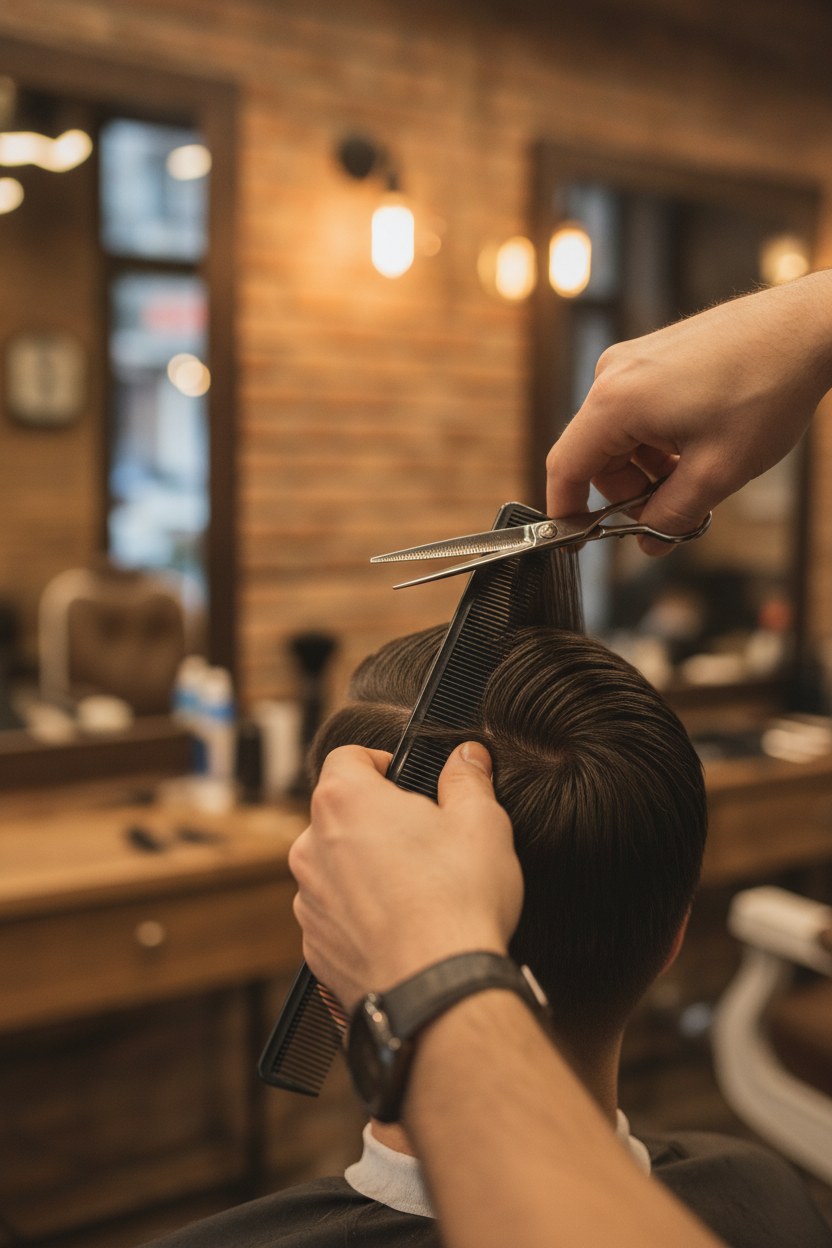
A barber working scissor-over-comb at the back of a head, comb lifting a section against the fall

From the desk

Read the head, then the name

People bring a name — a fade, a French crop, a flow — and a photo of someone it looked right on. Turn the head around first. The name of a cut describes a finished picture; it says nothing about where hair grows from, which direction it falls, or how much of it there is. Two heads given the exact same instruction leave looking like two different decisions, because the crown had the last word both times.

Most of what goes wrong is a reading problem, not a cutting problem: weight mistaken for length, a cowlick blunted instead of calmed, a hard line drawn where the hairline had already made a softer one. Learn to read your own crown, cowlick, weight and texture, and the conversation at any chair gets short and honest.

Written at the desk by the Shear & Comb editors · Kadıköy · 23 November 2026
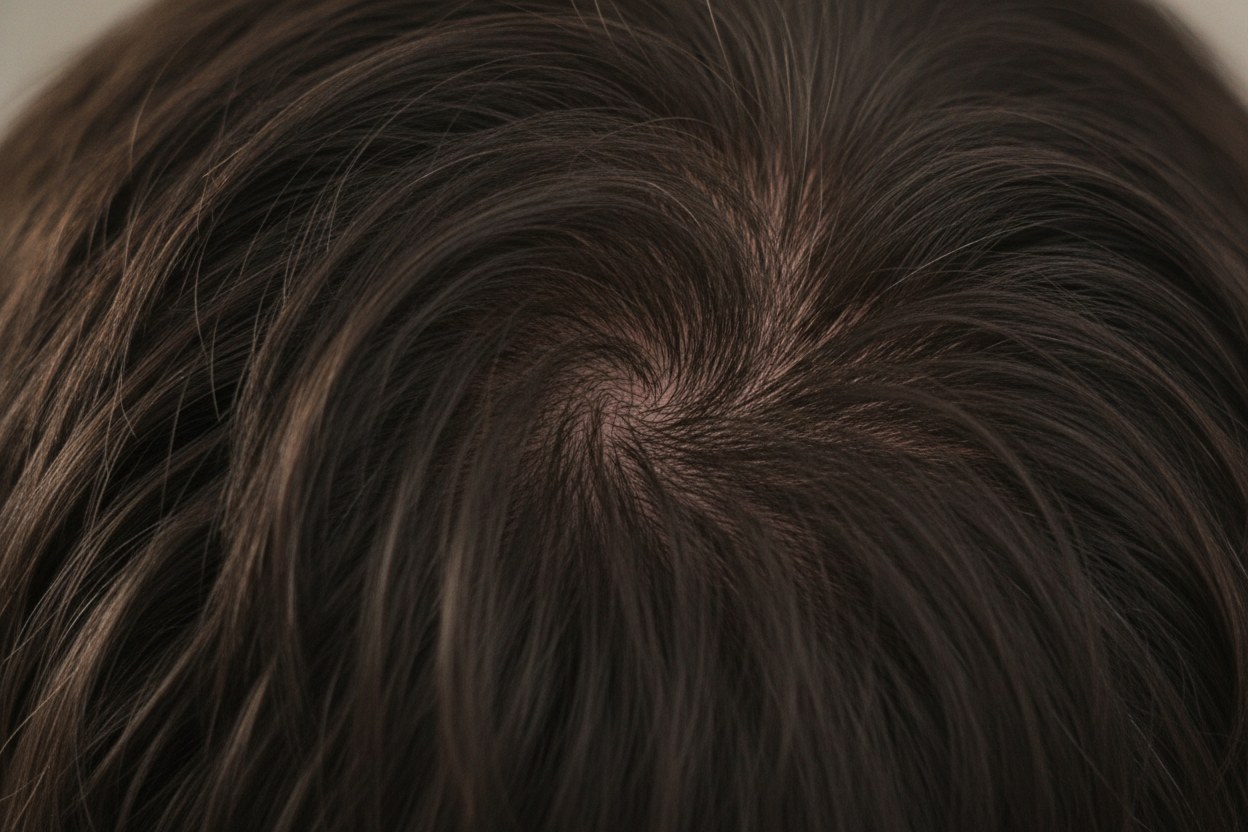
Close view of a crown swirl, the single growth point where the hair turns

Said at every reading worth repeating

Wet hair sits shorter than it cuts. It is wet to control the cut, but the shape is judged dry — a cut that looks right soaking wet is usually a centimetre too short once it dries and lifts.

A photo you bring is a direction, not a promise. It tells the mood you want; it cannot tell your crown to behave like someone else's. Use it to steer, never to copy.

The table · four columns

Read it in four columns

What you see in the mirror, what it means, what to ask at the chair — and, just as important, what it does not prove. Hold the mirror cells up to your own head, not to a photo.

Reference read against your own head
You seeIt meansAsk forDoes not prove
A single clockwise swirl One growth point; the back falls to one side on its own. A little length left over the swirl so it can sit. That the front should match — the swirl rules the crown only.
Two swirls — a double crown Two growth points in conflict; the back resists lying flat short. Weight kept through the crown, a longer guard than the sides. Thinning. A double crown is simply two engines.
A flat patch that lifts A cowlick pushing against the fall of the hair. Point-cutting into it; weight calms, blunt ends raise. Damage or a bald spot.
Heavy hair that falls flat Too much weight — not, usually, too much length. Weight off underneath, outline kept. That you need to go shorter.
See-through, wispy ends Over-thinned ends, or fine density at the perimeter. Blunt ends, no more thinning, let it rebuild. That the whole head is thin.
Past eight weeks The outline has gone soft; the weight has returned. A full reset of the perimeter and the weight. A reason to cut drastically short.

Build your mirror read

Pick what you actually see. The desk assembles the read, the chair-side script, and the honest caveats — take it with you.

Pick what you see 01

Your mirror read WK —

Pick what you see in the mirror. The desk will assemble what it means, what to ask at the chair, and what it does not prove.

What you’re reading

    What to ask at the chair

      What this does not prove

        Nothing read yet

        Weight vs texture

        What scissors remove is weight

        Weight is the mass of hair pulling a shape down — it reads as flatness, as a cut that “grew out fast,” as a style that won't lift. Length is only the longest measurement of the outline. You can be heavy and short at the same time, which is why cutting shorter so often makes the flatness worse, not better.

        Texture is what's left when the right weight is taken from underneath: movement, separation, a wave that finally has room to form. Removing weight is quiet work — mostly invisible, mostly underneath. If you can see exactly where the scissors have been, too much was taken from the outside.

        take weight first outline last
        Thick hair weighed down and falling flat before weight is removed
        Weight · the same length, falling flat
        The same length of hair with weight removed underneath, lifting into visible texture
        Texture · weight taken from underneath

        Crown & cowlick

        The back of the head writes the front

        Close view of a crown swirl showing the single growth point where the hair turns

        Find your crown in two mirrors before you say a word at the chair. A single swirl means the hair behind it falls to one side and will keep doing so — fight it flat and it lifts by the afternoon. Two swirls, a double crown, is not a problem to be cut out; it is two growth engines that need weight left between them.

        A cowlick at the front is the same story told louder: hair lifting against its own fall. It is calmed by weight and raised by blunt ends — the opposite of what instinct says. A line drawn above the natural hairline grows out crooked, so the honest edge sits on the growth, not above it.

        grows out crooked

        How a shape settles, week by week

        Weeks since the cut 02

        • WK 0
        • WK 1
        • WK 2
        • WK 3
        • WK 4
        • WK 5
        • WK 6
        • WK 8
        • WK 0 Cut. Sharpest it will look — and the least like it will settle. Judge nothing yet.
        • WK 1–2 Dropping. Weight redistributes, the crown asserts itself, the outline eases.
        • WK 4–6 True line. What you see now is the honest shape. This is when to judge a reshape from.
        • WK 8+ Reset. Edge gone, weight back. Not “overgrown” — just due.

        Guards & millimetres

        A guard number means nothing until you say it in millimetres

        A clipper guard is named by the length it leaves on the comb. The scale below is the one every taper is read on — a number on its own is a habit; the millimetres are the fact.

        The guard scale — length left, in millimetres

        • 0 · 1.5 mm
        • 0.5 · 2 mm
        • 1 · 3 mm
        • 2 · 6 mm
        • 3 · 10 mm

        How a fade climbs those steps

        • Skin at the hem — 0 mm
        • Guard 0 — 1.5 mm
        • Guard 0.5 — 2 mm
        • Guard 1 — 3 mm
        • Guard 2 — 6 mm
        • Length on top — scissor work
        guard 1 = 3 mm 25 min in the chair

        Honest about the fade

        A fade is a ladder of guards, each a step shorter than the last, blended so the seam between them disappears. One edge is cut to a clean line; the opposite dissolves to skin. That is the whole grammar of it.

        And it is temporary by design: a skin fade holds about three weeks, because the first millimetre of regrowth softens the shortest point. holds ~3 weeks You cannot tidy your own nape to a straight line at home; that one needs a second mirror and another pair of hands.

        How a reading goes

        From the first look to the true line

        1. 01 Read the weeks first. How old the last cut is changes every other reading. min 0
        2. 02 Read the crown before the style. Growth points before names; two mirrors, hands in the hair, the photo left on the shelf. min 0–5
        3. 03 Weight comes off before length. Quiet work underneath; the outline is taken last, and only as much as the shape still asks for. min 5–25
        4. 04 Judge it dry. Wet hair sits shorter than it cuts; let it dry and lift before any final decision. dry is the truth
        5. 05 Reshape from the true line. At week four to six the shape is honest — cut from what settled, not from day one. WK 4–6

        From the shelf · recently

        Desk notes

        Table

        Autumn weight notes added to the table

        New mirror rows for heavy, flat-falling hair as the season turns.

        Fades

        A column on the three-week fade

        Why the shortest point softens first, and why that is honest, not a flaw.

        Guards

        The guard scale, re-read in millimetres

        Every guard number on the shelf, paired with the length it actually leaves.

        Before you write

        Questions the desk gets most

        FAQ
        Is there any booking on this site?

        No. There is no booking form, no checkout and no account here — on purpose. This is a reading desk, not a shop. Read the table, build your mirror read, and take it to whichever chair you already trust.

        Why read the crown before choosing a style?

        Because the crown has the last word. Growth direction, swirls and cowlicks decide how any shape falls on your head — far more than the name of the cut does. Reading them first means aiming for something that will actually sit, instead of fighting your hair for weeks.

        My hair looks different wet. Which length is real?

        The dry one. Wet hair sits shorter than it cuts — it is weighed down and stretched out. A cut is controlled wet but judged dry, once it has lifted into the length you wear day to day.

        What does a guard number mean in millimetres?

        A clipper guard is named by the length it leaves. A number 1 leaves about 3 mm, a number 2 about 6 mm, a number 0 around 1.5 mm. A guard number on its own tells you nothing until you say it in millimetres.

        Is this medical advice about hair or skin?

        No. Nothing here is a remedy for anything. Hair loss, a sore scalp or a skin reaction is a question for a doctor, not for a pair of scissors — this desk only reads shape, weight and growth.